Drywall Repair: Reading the Crack Before You Patch It
On
Filling a crack is easy. Filling the same crack three times is a sign that nobody asked what opened it.
Drywall is a rigid board fixed to a frame that moves. Almost every fault in it comes from that one sentence: something behind the surface shifted, swelled, dried or was never fastened properly, and the board did the only thing a rigid sheet can do. Reading which of those happened, before mixing any compound, is what separates a repair that lasts from a cosmetic delay.
Where a crack starts tells you what caused it
Corners of doors and windows
A short crack running diagonally up and away from a door or window corner is the most common fault in any house, and it is almost always structural movement rather than a defect in the board.
Openings interrupt the frame. Load has to travel around them, and it concentrates at the corners. When the building moves seasonally, that concentration opens the weakest line it can find, which is the joint nearest the corner. If the sheet was cut so that a butt joint lands exactly at the corner rather than spanning past it, the crack is effectively pre drawn.
These usually stabilise. They open in one season and stay roughly the same width for years. They can be repaired properly, but only by treating the joint rather than the crack.
Long straight lines along a ceiling or wall
A crack that runs dead straight for a metre or more, especially along a ceiling, is following a seam or a framing member. Straight means man made. Building movement produces wandering, tapering cracks; a perfectly straight line is a joint that failed.
The usual causes are tape that was bedded into too little compound and never bonded, or a joint that spans two sheets fastened to framing that has since twisted or dried out.
Nail pops and small round bulges
A row of small circular bumps or dark rings marks fasteners backing out. The frame dried and shrank away from the board, and the fastener stayed put while the surface moved.
This is not a crack and it will not respond to filling. Refilling over a proud fastener leaves a lump that becomes obvious in raking light within weeks. The fastener has to be dealt with first.
Staining, softness or a crack that will not stay closed
A repair that fails repeatedly in the same spot is not a bad repair. It is a moisture problem being asked to behave like a cosmetic one.
Gypsum absorbs water, loses strength and does not fully recover. A patch over damp board is holding onto something with no strength left. If the surface is soft, discoloured, bubbled or smells musty, the question stops being about compound entirely.
The test that costs nothing
Before any tool comes out, press firmly beside the fault with your thumb.
Sound board is unyielding. It has no give and no sound. If the surface flexes, crunches quietly or feels spongy, the board has lost integrity or is not fastened to anything at that point. Nothing you spread on top will change that.
Run the same test in a grid around the area, not just at the crack. The point is to find the edge of the sound material, which is where the repair boundary has to sit. Homeowners tend to discover during a repaint that the compromised area is considerably larger than the visible mark, which is why anyone doing drywall repair in riverside will map the sound edges before deciding on a patch size rather than after.
Matching what is already on the wall
Repairing the substrate is half the work. The other half is making the repair disappear, and that is a texture problem.
Most walls are not flat. They carry a sprayed, rolled or hand applied texture, and the eye is extremely good at spotting where one stops and another starts, particularly on a wall that catches side light from a window.
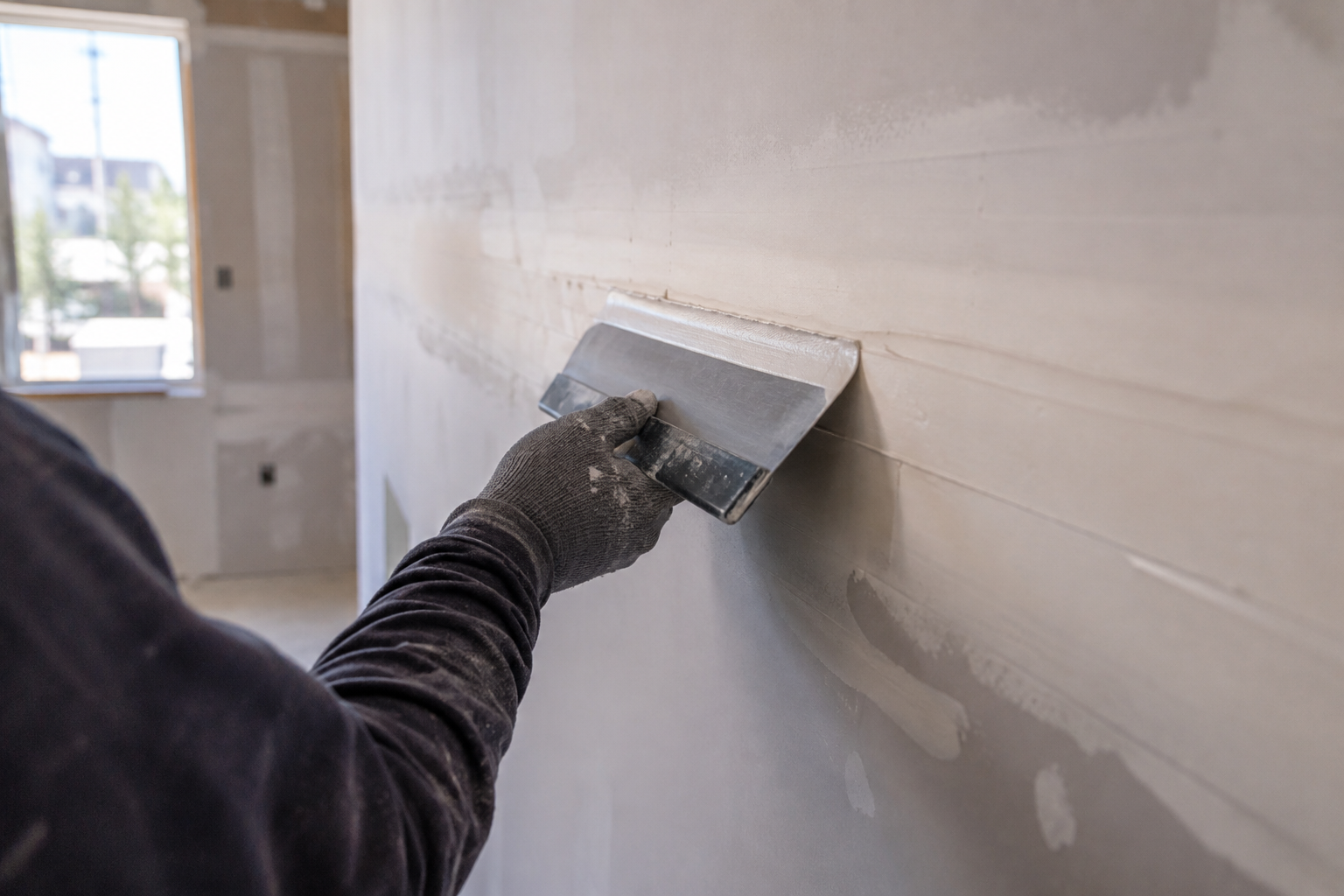
Matching means identifying the texture type, mixing compound to the right consistency, and applying it with the same tool and pressure that produced the original. It is practised, not read. The usual tell of a rushed repair is a patch that is flatter and smoother than everything around it, which reads as a bright spot under lamplight even when the colour is a perfect match.
This is also why priming matters on a repair. Fresh compound is far more porous than the aged painted surface beside it, so paint applied straight over it dries to a different sheen. The patch shows as a dull halo even though the colour is identical.
Repairs by size, and where the line falls
Hairline and small
Surface cracks with sound board either side. Open the crack slightly so compound has something to key into rather than skimming over a closed line, then fill, feather wide, sand, prime.
Feathering is the step people cut short. Compound has to be carried well beyond the fault so the transition is invisible, which means a repair is always considerably wider than the damage.
Failed tape
The tape has to come out. Filling over lifted tape traps the failure underneath and it reappears along the same line, usually within a year. New tape is bedded into wet compound, coated and feathered in stages.
Holes up to fist sized
A backing is needed so the patch has something to bear on. A mesh patch works at the small end; beyond that a proper backer or a cut piece of board fastened to something solid is the honest answer.
Anything larger, or any soft board
Cut back to the framing on both sides and replace the section. This feels drastic and it is the repair that does not come back. Patching soft board is spending effort on material that has already failed.
What to sort out before the patching
The order matters, and almost every repeat failure comes from getting it wrong.
- Find and stop the water. Plumbing, roof, flashing, condensation. A patch is the last step, never the first.
- Let it dry properly. Surface dry is not dry. Framing behind the board holds moisture long after the face feels fine.
- Deal with movement where you can. Refasten loose board, reseat popped fasteners into solid framing.
- Then repair.
Skipping straight to step four is what makes a wall that gets patched every spring.
Cracks worth taking seriously
Most cracks are a nuisance. A few are information.
Worth a closer look: a crack that keeps widening measurably over months rather than settling; one wide enough to slide a coin into; several appearing at once across different rooms; doors and windows that have started binding in the same period; or a floor that has developed a noticeable slope.
Any of those is a question about the structure rather than the surface, and filling it hides the only evidence available.
When to repair relative to painting
If a repaint is planned, the repairs go first and they need to be finished, not merely done.
Compound keeps shrinking slightly as it gives up its water, and a patch painted the same afternoon will often sink a fraction below the surrounding surface over the following week. The result is a shallow dish that catches light exactly where the repair was, which is the opposite of what the work was for.
The practical sequence is repair, let the compound dry through rather than skin over, sand, prime the patch specifically, and only then paint. On a large repair it is also worth priming and painting the whole wall corner to corner rather than spot painting. Even a perfect colour match ages differently from paint that has been on the wall for five years, and a spot repair on a sun facing wall usually announces itself within a season.
The honest summary
A crack is a symptom, and the useful work is diagnosis. Where it starts, whether the board around it is sound, whether anything is wet, and whether it is still moving.
Get that right and the repair is straightforward and permanent. Get it wrong and you will do the same work again next year, slightly larger, with the original cause still sitting quietly behind the wall.
Need help in Riverside?
Call (951) 305-2581